
Exhaust Wrap vs. Ceramic Thermal Coatings: Surviving Track Day Heat Without Killing Your Headers

Underhood Thermal Warfare on Road Courses

Track driving changes the heat problem completely. A street car gets periods of low load, airflow through the radiator grille, and long cooldown intervals. A road-race car sees repeated full-throttle pulls, hard braking, cornering, and rapid gear changes while the engine, exhaust, transmission, brakes, and tires are already hot. Each lap adds energy faster than a compact engine bay can reject it, especially when headers run close to the master cylinder, fuel rails, wiring looms, steering components, or plastic air ducts.

Radiant exhaust heat is often more damaging than the temperature shown on a coolant gauge. A header can project intense infrared energy directly onto nearby components even when coolant temperature remains under control. Brake fluid reservoirs, clutch hydraulics, fuel injectors, ignition coils, alternator wiring, and electronic connectors can all suffer from prolonged exposure. Heat soak can also change throttle response and fuel delivery, while overheated fluids reduce the consistency that matters when every braking zone arrives at race speed. For technical background, Checking your browser may appear briefly before the research page loads.

That leaves grassroots builders with a familiar choice. Fiberglass, basalt, or titanium wrap is inexpensive and easy to install, while a professionally applied ceramic thermal coating costs more and demands proper surface preparation. The wrap appears to solve the problem immediately by keeping heat inside the tubing. The catch is that it also keeps moisture, oil, and extreme thermal energy against the header metal. For a car expected to survive repeated track sessions, the smarter question is not simply which option feels coolest after one lap. It is which system protects surrounding parts without shortening header life.

The Brutal Reality of Exhaust Wraps and Pipe Metallurgy

Exhaust wrap works by restricting heat transfer from the pipe surface to the surrounding air. That can reduce radiant temperature in the short term, but the energy has not disappeared. It remains in the tube and exhaust gas, driving the metal to a higher operating temperature. On a naturally aspirated engine, that may support exhaust velocity and scavenging. On a turbocharged application, it can also preserve turbine energy. The tradeoff is that the header substrate becomes responsible for handling more of the thermal load during every acceleration zone.

Repeated heat cycling is particularly hard on thin-wall stainless tubing. Expansion and contraction create stress at welds, collectors, bends, and mounting points. High temperature can accelerate oxidation and weaken the material, while trapped moisture and contaminants promote corrosion beneath the wrap. Intergranular attack can progress along vulnerable grain boundaries, and localized wall thinning may remain invisible until a small crack becomes a major exhaust leak. The failure often appears first as a faint ticking sound, soot around a weld, a changed oxygen-sensor reading, or a loss of mid-range torque.

Wrap also becomes dangerous when it absorbs fluids. Power-steering oil, engine oil, fuel, coolant, and chain lubricant can soak into the fibers and remain close to an extremely hot tube. A leak that might otherwise drip away can instead turn the wrap into a contaminated wick. A track car compounds the risk because the header is exposed to sustained heat, vibration, and airflow that can feed a small fire. The broader engineering principles behind high-temperature degradation and metallic fatigue are discussed in SAE technical research on exhaust thermomechanical fatigue.

  • Wrap can reduce immediate radiant heat while increasing tube temperature.
  • Moisture trapped against stainless steel can accelerate corrosion and stress cracking.
  • Oil or power-steering fluid can turn saturated fibers into a fire hazard.
  • Cracks commonly begin at weld toes, collectors, tight bends, and unsupported sections.

There are legitimate uses for wrap. A temporary budget build, a short-duration drag car, or a section that cannot accept a shield may benefit from carefully installed material. It should never be treated as a substitute for leak inspection, fluid containment, or proper shielding. Stainless safety ties, correct overlap, dry storage, and frequent removal for inspection are essential. If the car runs long sessions, sees wet weather, or carries fluid lines near the header, the risk calculation shifts strongly toward a coating and physical shield.

Ceramic Barrier Coatings and Internal Scavenging Efficiency

A ceramic thermal coating forms a bonded barrier on the prepared header surface. Unlike a loose wrap, it does not hold water against the metal or create a thick, oil-absorbent layer. A properly applied coating can reduce surface emissivity, meaning less energy radiates toward adjacent components. The result is not a magic reduction in total exhaust energy. Instead, heat transfer becomes more controlled, and nearby brake, fuel, electrical, and steering hardware gets a better chance to remain within its intended operating range.
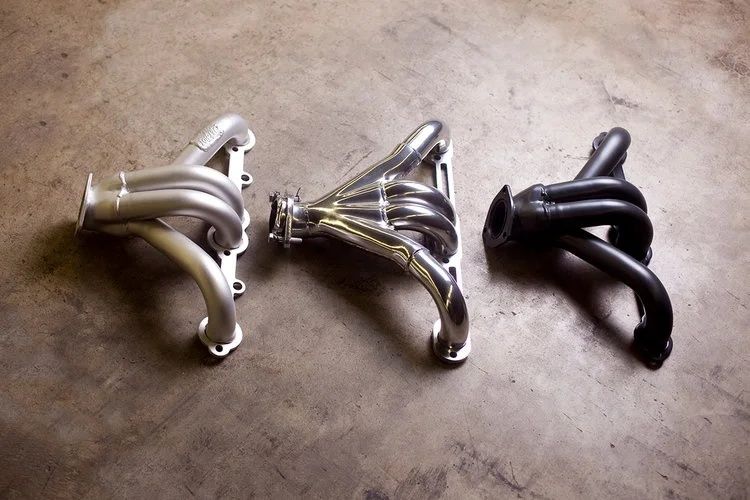
Three exhaust headers with polished, silver, and black finishes
Choosing the right header finish helps manage radiant heat while preserving the durability and consistency required for repeated track sessions.

Internal coating systems are also used to manage the inside surface of the primary tubes. Keeping more heat in the exhaust stream can preserve gas temperature, density behavior, and velocity as the pulses move through the header. That can support more consistent scavenging, particularly when the header design, cam timing, collector dimensions, and engine speed range are already matched. A coating will not correct an undersized collector or a poor firing-order layout, but it can help a sound exhaust design maintain its intended power delivery as the session progresses.

The protection extends beyond temperature. A properly prepared and cured coating can provide a barrier against road salt, condensation, splash water, and incidental fuel contamination. It still requires sound metal underneath. Ceramic coating cannot repair a cracked tube, replace failed weld penetration, or stop a header from flexing against the cylinder head. Surface cleaning, media blasting, inspection, and controlled curing are critical because contamination or trapped moisture can cause peeling and localized failure.

For a racecar thermal system, the governing principles are clearly outlined through established exhaust heat management, where exhaust energy must be balanced between gas velocity, component protection, and heat rejection.

  1. Inspect the header for cracks, thin spots, distorted flanges, and poor welds before coating.
  2. Use a coating provider that specifies substrate preparation, coating location, thickness, and cure procedure.
  3. Combine the coated header with airflow management and an air gap wherever nearby components remain heat-sensitive.
  4. Retorque accessible fasteners and inspect the finish after the first full heat cycle and track session.

The most important benefit is repeatability. A coated header does not merely make the engine bay feel cooler after a single run. It helps limit heat transfer into the surrounding system while avoiding the moisture trap associated with wrap. That supports more stable brake-fluid temperature, less fuel-system heat soak, better wiring reliability, and more predictable engine behavior across multiple sessions.

Direct Comparison of Track Thermal Management Strategies

Wrap is attractive because the entry cost is low and the installation can be completed with hand tools. Ceramic coating costs more and usually requires removing the headers, cleaning them thoroughly, and sending them to a specialist. Professional preparation is not cosmetic. Any oil, rust, scale, or silicone left on the surface can interfere with adhesion and create a failure point. Installation labor therefore belongs in the comparison, especially when repeated header removal becomes part of a maintenance schedule.

Consideration Exhaust wrap Ceramic coating with shielding
Initial cost Low Moderate to high
Immediate installation Fast, often DIY Requires removal, preparation, and curing
Radiant heat control Can reduce surface radiation temporarily Controls emissivity and works with an air gap
Header metal exposure Higher retained tube temperature and moisture risk Lower contamination risk when properly applied
Fire and fluid safety Risk increases when fibers absorb oil or fuel No absorbent outer layer, though leaks remain dangerous
Long-term inspection Wrap must be removed regularly Cracks and surface damage are easier to see

Claims about a specific underhood temperature drop need careful interpretation. A thermometer pointed at the outside of a wrapped tube, a thermocouple mounted near a fuel rail, and an infrared camera reading a shield surface are measuring different things. A cooler nearby component is valuable, but it does not prove the header itself is healthier. On a track car, header fatigue life, exhaust-leak frequency, and session-to-session consistency matter just as much as a single maximum temperature reading.

The Hybrid Solution for Extreme Track Durability

The strongest setup for demanding road-course use combines a ceramic-coated header with a physical shield positioned between the primary tubes and the vulnerable component. The shield should be air-gapped, rigid, and shaped to block direct line-of-sight radiation without sealing the header inside a heat box. Dimpled stainless sheet is popular because the formed surface adds stiffness while the stand-offs preserve a layer of still air. That air gap is the key. A shield touching the header can simply become another hot conductor.

Not every part of the engine bay needs the same treatment. Local shielding is often more effective than wrapping every inch of tubing. A small barrier can protect the brake booster line, master-cylinder reservoir, starter solenoid, steering rack boot, fuel rail, or wiring harness while allowing the primary tubes to reject heat into controlled airflow. Heat shields should also be supported independently whenever possible. Attaching a heavy shield directly to thin header tubing adds vibration and thermal stress at exactly the points most likely to crack.

  • Use internal and external ceramic coating when the header design and budget justify maximum control.
  • Maintain an air gap between the shield and the header or protected component.
  • Shield brake hydraulics, fuel-system parts, wiring, and steering components first.
  • Provide an exit path for hot air through vents, louvers, or carefully managed engine-bay airflow.
  • Contain fluid leaks before the car reaches the track, rather than relying on heat protection to manage them.

Pre-event inspection should begin with a cold header and a bright light. Look for soot tracks, hairline cracks, distorted flanges, loose springs, broken brackets, and discoloration around welds. Run a hand over nearby wiring and hoses to check for hardening, swelling, or melted insulation. Confirm that the shield cannot contact the header under engine movement, curb strikes, or steering travel. A quick check after the first session is equally important because new cracks often reveal themselves only after the system reaches full temperature and cools again.

Tech inspection should also include fluid routing. Power-steering hoses, oil lines, fuel lines, and brake lines need adequate clearance, abrasion protection, and secure mounts. A ceramic coating reduces radiant exposure, but it does not make a leaking hose safe. Check the header fasteners, oxygen-sensor wiring, collector joints, and exhaust hangers between sessions. Early intervention on a small stress crack is far cheaper than repairing a damaged engine bay or losing a race weekend to a fire.

Building Reliable Header Systems That Survive the Checkered Flag

Exhaust wrap remains a useful short-term tool when budget, packaging, or a temporary build dictates its use. It can reduce radiant heat around a particularly exposed section, but it carries a maintenance burden and increases the consequences of fluid contamination. For a car that runs long sessions, repeated events, or high-output engines with thin-wall headers, preserving the substrate is more important than achieving the lowest apparent surface temperature after one lap.

A practical selection framework starts with the operating environment. Choose wrap only when the material can stay dry, clear of fluid leaks, and accessible for frequent inspection. Choose ceramic coating when header longevity, repeatable power delivery, and clean inspection matter. Add an air-gapped shield wherever a brake, fuel, electrical, or steering component sits in direct view of the exhaust. The best solution is usually not one product but a system that controls radiation, protects the metal, and gives hot air a deliberate path out of the bay.

Before each event, inspect the headers cold, verify all clearances, check for fluid contamination, and confirm that shields and brackets remain tight. After each session, look for soot, unusual ticking, loose fasteners, and changes in engine response. Replace heat-damaged wiring sleeves and hoses before they fail under load. With the right combination of ceramic barrier protection, carefully placed shielding, sound airflow, and disciplined inspection, the header can keep its scavenging advantage without sacrificing the components that make reliable track performance possible.
Exhaust Wrap vs. Ceramic Thermal Coatings: Surviving Track Day Heat Without Killing Your Headers

Underhood Thermal Warfare on Road Courses

Track driving changes the heat problem completely. A street car gets periods of low load, airflow through the radiator grille, and long cooldown intervals. A road-race car sees repeated full-throttle pulls, hard braking, cornering, and rapid gear changes while the engine, exhaust, transmission, brakes, and tires are already hot. Each lap adds energy faster than a compact engine bay can reject it, especially when headers run close to the master cylinder, fuel rails, wiring looms, steering components, or plastic air ducts.

Radiant exhaust heat is often more damaging than the temperature shown on a coolant gauge. A header can project intense infrared energy directly onto nearby components even when coolant temperature remains under control. Brake fluid reservoirs, clutch hydraulics, fuel injectors, ignition coils, alternator wiring, and electronic connectors can all suffer from prolonged exposure. Heat soak can also change throttle response and fuel delivery, while overheated fluids reduce the consistency that matters when every braking zone arrives at race speed. For technical background, Checking your browser may appear briefly before the research page loads.

That leaves grassroots builders with a familiar choice. Fiberglass, basalt, or titanium wrap is inexpensive and easy to install, while a professionally applied ceramic thermal coating costs more and demands proper surface preparation. The wrap appears to solve the problem immediately by keeping heat inside the tubing. The catch is that it also keeps moisture, oil, and extreme thermal energy against the header metal. For a car expected to survive repeated track sessions, the smarter question is not simply which option feels coolest after one lap. It is which system protects surrounding parts without shortening header life.

The Brutal Reality of Exhaust Wraps and Pipe Metallurgy

Exhaust wrap works by restricting heat transfer from the pipe surface to the surrounding air. That can reduce radiant temperature in the short term, but the energy has not disappeared. It remains in the tube and exhaust gas, driving the metal to a higher operating temperature. On a naturally aspirated engine, that may support exhaust velocity and scavenging. On a turbocharged application, it can also preserve turbine energy. The tradeoff is that the header substrate becomes responsible for handling more of the thermal load during every acceleration zone.

Repeated heat cycling is particularly hard on thin-wall stainless tubing. Expansion and contraction create stress at welds, collectors, bends, and mounting points. High temperature can accelerate oxidation and weaken the material, while trapped moisture and contaminants promote corrosion beneath the wrap. Intergranular attack can progress along vulnerable grain boundaries, and localized wall thinning may remain invisible until a small crack becomes a major exhaust leak. The failure often appears first as a faint ticking sound, soot around a weld, a changed oxygen-sensor reading, or a loss of mid-range torque.

Wrap also becomes dangerous when it absorbs fluids. Power-steering oil, engine oil, fuel, coolant, and chain lubricant can soak into the fibers and remain close to an extremely hot tube. A leak that might otherwise drip away can instead turn the wrap into a contaminated wick. A track car compounds the risk because the header is exposed to sustained heat, vibration, and airflow that can feed a small fire. The broader engineering principles behind high-temperature degradation and metallic fatigue are discussed in SAE technical research on exhaust thermomechanical fatigue.

  • Wrap can reduce immediate radiant heat while increasing tube temperature.
  • Moisture trapped against stainless steel can accelerate corrosion and stress cracking.
  • Oil or power-steering fluid can turn saturated fibers into a fire hazard.
  • Cracks commonly begin at weld toes, collectors, tight bends, and unsupported sections.

There are legitimate uses for wrap. A temporary budget build, a short-duration drag car, or a section that cannot accept a shield may benefit from carefully installed material. It should never be treated as a substitute for leak inspection, fluid containment, or proper shielding. Stainless safety ties, correct overlap, dry storage, and frequent removal for inspection are essential. If the car runs long sessions, sees wet weather, or carries fluid lines near the header, the risk calculation shifts strongly toward a coating and physical shield.

Ceramic Barrier Coatings and Internal Scavenging Efficiency

A ceramic thermal coating forms a bonded barrier on the prepared header surface. Unlike a loose wrap, it does not hold water against the metal or create a thick, oil-absorbent layer. A properly applied coating can reduce surface emissivity, meaning less energy radiates toward adjacent components. The result is not a magic reduction in total exhaust energy. Instead, heat transfer becomes more controlled, and nearby brake, fuel, electrical, and steering hardware gets a better chance to remain within its intended operating range.

Three exhaust headers with polished, silver, and black finishes
Choosing the right header finish helps manage radiant heat while preserving the durability and consistency required for repeated track sessions.

Internal coating systems are also used to manage the inside surface of the primary tubes. Keeping more heat in the exhaust stream can preserve gas temperature, density behavior, and velocity as the pulses move through the header. That can support more consistent scavenging, particularly when the header design, cam timing, collector dimensions, and engine speed range are already matched. A coating will not correct an undersized collector or a poor firing-order layout, but it can help a sound exhaust design maintain its intended power delivery as the session progresses.

The protection extends beyond temperature. A properly prepared and cured coating can provide a barrier against road salt, condensation, splash water, and incidental fuel contamination. It still requires sound metal underneath. Ceramic coating cannot repair a cracked tube, replace failed weld penetration, or stop a header from flexing against the cylinder head. Surface cleaning, media blasting, inspection, and controlled curing are critical because contamination or trapped moisture can cause peeling and localized failure.

For a racecar thermal system, the governing principles are clearly outlined through established exhaust heat management, where exhaust energy must be balanced between gas velocity, component protection, and heat rejection.

  1. Inspect the header for cracks, thin spots, distorted flanges, and poor welds before coating.
  2. Use a coating provider that specifies substrate preparation, coating location, thickness, and cure procedure.
  3. Combine the coated header with airflow management and an air gap wherever nearby components remain heat-sensitive.
  4. Retorque accessible fasteners and inspect the finish after the first full heat cycle and track session.

The most important benefit is repeatability. A coated header does not merely make the engine bay feel cooler after a single run. It helps limit heat transfer into the surrounding system while avoiding the moisture trap associated with wrap. That supports more stable brake-fluid temperature, less fuel-system heat soak, better wiring reliability, and more predictable engine behavior across multiple sessions.

Direct Comparison of Track Thermal Management Strategies

Wrap is attractive because the entry cost is low and the installation can be completed with hand tools. Ceramic coating costs more and usually requires removing the headers, cleaning them thoroughly, and sending them to a specialist. Professional preparation is not cosmetic. Any oil, rust, scale, or silicone left on the surface can interfere with adhesion and create a failure point. Installation labor therefore belongs in the comparison, especially when repeated header removal becomes part of a maintenance schedule.

Consideration Exhaust wrap Ceramic coating with shielding
Initial cost Low Moderate to high
Immediate installation Fast, often DIY Requires removal, preparation, and curing
Radiant heat control Can reduce surface radiation temporarily Controls emissivity and works with an air gap
Header metal exposure Higher retained tube temperature and moisture risk Lower contamination risk when properly applied
Fire and fluid safety Risk increases when fibers absorb oil or fuel No absorbent outer layer, though leaks remain dangerous
Long-term inspection Wrap must be removed regularly Cracks and surface damage are easier to see

Claims about a specific underhood temperature drop need careful interpretation. A thermometer pointed at the outside of a wrapped tube, a thermocouple mounted near a fuel rail, and an infrared camera reading a shield surface are measuring different things. A cooler nearby component is valuable, but it does not prove the header itself is healthier. On a track car, header fatigue life, exhaust-leak frequency, and session-to-session consistency matter just as much as a single maximum temperature reading.

The Hybrid Solution for Extreme Track Durability

The strongest setup for demanding road-course use combines a ceramic-coated header with a physical shield positioned between the primary tubes and the vulnerable component. The shield should be air-gapped, rigid, and shaped to block direct line-of-sight radiation without sealing the header inside a heat box. Dimpled stainless sheet is popular because the formed surface adds stiffness while the stand-offs preserve a layer of still air. That air gap is the key. A shield touching the header can simply become another hot conductor.

Not every part of the engine bay needs the same treatment. Local shielding is often more effective than wrapping every inch of tubing. A small barrier can protect the brake booster line, master-cylinder reservoir, starter solenoid, steering rack boot, fuel rail, or wiring harness while allowing the primary tubes to reject heat into controlled airflow. Heat shields should also be supported independently whenever possible. Attaching a heavy shield directly to thin header tubing adds vibration and thermal stress at exactly the points most likely to crack.

  • Use internal and external ceramic coating when the header design and budget justify maximum control.
  • Maintain an air gap between the shield and the header or protected component.
  • Shield brake hydraulics, fuel-system parts, wiring, and steering components first.
  • Provide an exit path for hot air through vents, louvers, or carefully managed engine-bay airflow.
  • Contain fluid leaks before the car reaches the track, rather than relying on heat protection to manage them.

Pre-event inspection should begin with a cold header and a bright light. Look for soot tracks, hairline cracks, distorted flanges, loose springs, broken brackets, and discoloration around welds. Run a hand over nearby wiring and hoses to check for hardening, swelling, or melted insulation. Confirm that the shield cannot contact the header under engine movement, curb strikes, or steering travel. A quick check after the first session is equally important because new cracks often reveal themselves only after the system reaches full temperature and cools again.

Tech inspection should also include fluid routing. Power-steering hoses, oil lines, fuel lines, and brake lines need adequate clearance, abrasion protection, and secure mounts. A ceramic coating reduces radiant exposure, but it does not make a leaking hose safe. Check the header fasteners, oxygen-sensor wiring, collector joints, and exhaust hangers between sessions. Early intervention on a small stress crack is far cheaper than repairing a damaged engine bay or losing a race weekend to a fire.

Building Reliable Header Systems That Survive the Checkered Flag

Exhaust wrap remains a useful short-term tool when budget, packaging, or a temporary build dictates its use. It can reduce radiant heat around a particularly exposed section, but it carries a maintenance burden and increases the consequences of fluid contamination. For a car that runs long sessions, repeated events, or high-output engines with thin-wall headers, preserving the substrate is more important than achieving the lowest apparent surface temperature after one lap.

A practical selection framework starts with the operating environment. Choose wrap only when the material can stay dry, clear of fluid leaks, and accessible for frequent inspection. Choose ceramic coating when header longevity, repeatable power delivery, and clean inspection matter. Add an air-gapped shield wherever a brake, fuel, electrical, or steering component sits in direct view of the exhaust. The best solution is usually not one product but a system that controls radiation, protects the metal, and gives hot air a deliberate path out of the bay.

Before each event, inspect the headers cold, verify all clearances, check for fluid contamination, and confirm that shields and brackets remain tight. After each session, look for soot, unusual ticking, loose fasteners, and changes in engine response. Replace heat-damaged wiring sleeves and hoses before they fail under load. With the right combination of ceramic barrier protection, carefully placed shielding, sound airflow, and disciplined inspection, the header can keep its scavenging advantage without sacrificing the components that make reliable track performance possible.

Exhaust Wrap vs. Ceramic Thermal Coatings: Surviving Track Day Heat Without Killing Your Headers

Underhood Thermal Warfare on Road Courses

Track driving changes the heat problem completely. A street car gets periods of low load, airflow through the radiator grille, and long cooldown intervals. A road-race car sees repeated full-throttle pulls, hard braking, cornering, and rapid gear changes while the engine, exhaust, transmission, brakes, and tires are already hot. Each lap adds energy faster than a compact engine bay can reject it, especially when headers run close to the master cylinder, fuel rails, wiring looms, steering components, or plastic air ducts.

Radiant exhaust heat is often more damaging than the temperature shown on a coolant gauge. A header can project intense infrared energy directly onto nearby components even when coolant temperature remains under control. Brake fluid reservoirs, clutch hydraulics, fuel injectors, ignition coils, alternator wiring, and electronic connectors can all suffer from prolonged exposure. Heat soak can also change throttle response and fuel delivery, while overheated fluids reduce the consistency that matters when every braking zone arrives at race speed. For technical background, Checking your browser may appear briefly before the research page loads.

That leaves grassroots builders with a familiar choice. Fiberglass, basalt, or titanium wrap is inexpensive and easy to install, while a professionally applied ceramic thermal coating costs more and demands proper surface preparation. The wrap appears to solve the problem immediately by keeping heat inside the tubing. The catch is that it also keeps moisture, oil, and extreme thermal energy against the header metal. For a car expected to survive repeated track sessions, the smarter question is not simply which option feels coolest after one lap. It is which system protects surrounding parts without shortening header life.

The Brutal Reality of Exhaust Wraps and Pipe Metallurgy

Exhaust wrap works by restricting heat transfer from the pipe surface to the surrounding air. That can reduce radiant temperature in the short term, but the energy has not disappeared. It remains in the tube and exhaust gas, driving the metal to a higher operating temperature. On a naturally aspirated engine, that may support exhaust velocity and scavenging. On a turbocharged application, it can also preserve turbine energy. The tradeoff is that the header substrate becomes responsible for handling more of the thermal load during every acceleration zone.

Repeated heat cycling is particularly hard on thin-wall stainless tubing. Expansion and contraction create stress at welds, collectors, bends, and mounting points. High temperature can accelerate oxidation and weaken the material, while trapped moisture and contaminants promote corrosion beneath the wrap. Intergranular attack can progress along vulnerable grain boundaries, and localized wall thinning may remain invisible until a small crack becomes a major exhaust leak. The failure often appears first as a faint ticking sound, soot around a weld, a changed oxygen-sensor reading, or a loss of mid-range torque.

Wrap also becomes dangerous when it absorbs fluids. Power-steering oil, engine oil, fuel, coolant, and chain lubricant can soak into the fibers and remain close to an extremely hot tube. A leak that might otherwise drip away can instead turn the wrap into a contaminated wick. A track car compounds the risk because the header is exposed to sustained heat, vibration, and airflow that can feed a small fire. The broader engineering principles behind high-temperature degradation and metallic fatigue are discussed in SAE technical research on exhaust thermomechanical fatigue.

  • Wrap can reduce immediate radiant heat while increasing tube temperature.
  • Moisture trapped against stainless steel can accelerate corrosion and stress cracking.
  • Oil or power-steering fluid can turn saturated fibers into a fire hazard.
  • Cracks commonly begin at weld toes, collectors, tight bends, and unsupported sections.

There are legitimate uses for wrap. A temporary budget build, a short-duration drag car, or a section that cannot accept a shield may benefit from carefully installed material. It should never be treated as a substitute for leak inspection, fluid containment, or proper shielding. Stainless safety ties, correct overlap, dry storage, and frequent removal for inspection are essential. If the car runs long sessions, sees wet weather, or carries fluid lines near the header, the risk calculation shifts strongly toward a coating and physical shield.

Ceramic Barrier Coatings and Internal Scavenging Efficiency

A ceramic thermal coating forms a bonded barrier on the prepared header surface. Unlike a loose wrap, it does not hold water against the metal or create a thick, oil-absorbent layer. A properly applied coating can reduce surface emissivity, meaning less energy radiates toward adjacent components. The result is not a magic reduction in total exhaust energy. Instead, heat transfer becomes more controlled, and nearby brake, fuel, electrical, and steering hardware gets a better chance to remain within its intended operating range.

Three exhaust headers with polished, silver, and black finishes
Choosing the right header finish helps manage radiant heat while preserving the durability and consistency required for repeated track sessions.

Internal coating systems are also used to manage the inside surface of the primary tubes. Keeping more heat in the exhaust stream can preserve gas temperature, density behavior, and velocity as the pulses move through the header. That can support more consistent scavenging, particularly when the header design, cam timing, collector dimensions, and engine speed range are already matched. A coating will not correct an undersized collector or a poor firing-order layout, but it can help a sound exhaust design maintain its intended power delivery as the session progresses.

The protection extends beyond temperature. A properly prepared and cured coating can provide a barrier against road salt, condensation, splash water, and incidental fuel contamination. It still requires sound metal underneath. Ceramic coating cannot repair a cracked tube, replace failed weld penetration, or stop a header from flexing against the cylinder head. Surface cleaning, media blasting, inspection, and controlled curing are critical because contamination or trapped moisture can cause peeling and localized failure.

For a racecar thermal system, the governing principles are clearly outlined through established exhaust heat management, where exhaust energy must be balanced between gas velocity, component protection, and heat rejection.

  1. Inspect the header for cracks, thin spots, distorted flanges, and poor welds before coating.
  2. Use a coating provider that specifies substrate preparation, coating location, thickness, and cure procedure.
  3. Combine the coated header with airflow management and an air gap wherever nearby components remain heat-sensitive.
  4. Retorque accessible fasteners and inspect the finish after the first full heat cycle and track session.

The most important benefit is repeatability. A coated header does not merely make the engine bay feel cooler after a single run. It helps limit heat transfer into the surrounding system while avoiding the moisture trap associated with wrap. That supports more stable brake-fluid temperature, less fuel-system heat soak, better wiring reliability, and more predictable engine behavior across multiple sessions.

Direct Comparison of Track Thermal Management Strategies

Wrap is attractive because the entry cost is low and the installation can be completed with hand tools. Ceramic coating costs more and usually requires removing the headers, cleaning them thoroughly, and sending them to a specialist. Professional preparation is not cosmetic. Any oil, rust, scale, or silicone left on the surface can interfere with adhesion and create a failure point. Installation labor therefore belongs in the comparison, especially when repeated header removal becomes part of a maintenance schedule.

Consideration Exhaust wrap Ceramic coating with shielding
Initial cost Low Moderate to high
Immediate installation Fast, often DIY Requires removal, preparation, and curing
Radiant heat control Can reduce surface radiation temporarily Controls emissivity and works with an air gap
Header metal exposure Higher retained tube temperature and moisture risk Lower contamination risk when properly applied
Fire and fluid safety Risk increases when fibers absorb oil or fuel No absorbent outer layer, though leaks remain dangerous
Long-term inspection Wrap must be removed regularly Cracks and surface damage are easier to see

Claims about a specific underhood temperature drop need careful interpretation. A thermometer pointed at the outside of a wrapped tube, a thermocouple mounted near a fuel rail, and an infrared camera reading a shield surface are measuring different things. A cooler nearby component is valuable, but it does not prove the header itself is healthier. On a track car, header fatigue life, exhaust-leak frequency, and session-to-session consistency matter just as much as a single maximum temperature reading.

The Hybrid Solution for Extreme Track Durability

The strongest setup for demanding road-course use combines a ceramic-coated header with a physical shield positioned between the primary tubes and the vulnerable component. The shield should be air-gapped, rigid, and shaped to block direct line-of-sight radiation without sealing the header inside a heat box. Dimpled stainless sheet is popular because the formed surface adds stiffness while the stand-offs preserve a layer of still air. That air gap is the key. A shield touching the header can simply become another hot conductor.

Not every part of the engine bay needs the same treatment. Local shielding is often more effective than wrapping every inch of tubing. A small barrier can protect the brake booster line, master-cylinder reservoir, starter solenoid, steering rack boot, fuel rail, or wiring harness while allowing the primary tubes to reject heat into controlled airflow. Heat shields should also be supported independently whenever possible. Attaching a heavy shield directly to thin header tubing adds vibration and thermal stress at exactly the points most likely to crack.

  • Use internal and external ceramic coating when the header design and budget justify maximum control.
  • Maintain an air gap between the shield and the header or protected component.
  • Shield brake hydraulics, fuel-system parts, wiring, and steering components first.
  • Provide an exit path for hot air through vents, louvers, or carefully managed engine-bay airflow.
  • Contain fluid leaks before the car reaches the track, rather than relying on heat protection to manage them.

Pre-event inspection should begin with a cold header and a bright light. Look for soot tracks, hairline cracks, distorted flanges, loose springs, broken brackets, and discoloration around welds. Run a hand over nearby wiring and hoses to check for hardening, swelling, or melted insulation. Confirm that the shield cannot contact the header under engine movement, curb strikes, or steering travel. A quick check after the first session is equally important because new cracks often reveal themselves only after the system reaches full temperature and cools again.

Tech inspection should also include fluid routing. Power-steering hoses, oil lines, fuel lines, and brake lines need adequate clearance, abrasion protection, and secure mounts. A ceramic coating reduces radiant exposure, but it does not make a leaking hose safe. Check the header fasteners, oxygen-sensor wiring, collector joints, and exhaust hangers between sessions. Early intervention on a small stress crack is far cheaper than repairing a damaged engine bay or losing a race weekend to a fire.

Building Reliable Header Systems That Survive the Checkered Flag

Exhaust wrap remains a useful short-term tool when budget, packaging, or a temporary build dictates its use. It can reduce radiant heat around a particularly exposed section, but it carries a maintenance burden and increases the consequences of fluid contamination. For a car that runs long sessions, repeated events, or high-output engines with thin-wall headers, preserving the substrate is more important than achieving the lowest apparent surface temperature after one lap.

A practical selection framework starts with the operating environment. Choose wrap only when the material can stay dry, clear of fluid leaks, and accessible for frequent inspection. Choose ceramic coating when header longevity, repeatable power delivery, and clean inspection matter. Add an air-gapped shield wherever a brake, fuel, electrical, or steering component sits in direct view of the exhaust. The best solution is usually not one product but a system that controls radiation, protects the metal, and gives hot air a deliberate path out of the bay.

Before each event, inspect the headers cold, verify all clearances, check for fluid contamination, and confirm that shields and brackets remain tight. After each session, look for soot, unusual ticking, loose fasteners, and changes in engine response. Replace heat-damaged wiring sleeves and hoses before they fail under load. With the right combination of ceramic barrier protection, carefully placed shielding, sound airflow, and disciplined inspection, the header can keep its scavenging advantage without sacrificing the components that make reliable track performance possible.

Exhaust Wrap vs. Ceramic Thermal Coatings: Surviving Track Day Heat Without Killing Your Headers

Underhood Thermal Warfare on Road Courses

Track driving changes the heat problem completely. A street car gets periods of low load, airflow through the radiator grille, and long cooldown intervals. A road-race car sees repeated full-throttle pulls, hard braking, cornering, and rapid gear changes while the engine, exhaust, transmission, brakes, and tires are already hot. Each lap adds energy faster than a compact engine bay can reject it, especially when headers run close to the master cylinder, fuel rails, wiring looms, steering components, or plastic air ducts.

Radiant exhaust heat is often more damaging than the temperature shown on a coolant gauge. A header can project intense infrared energy directly onto nearby components even when coolant temperature remains under control. Brake fluid reservoirs, clutch hydraulics, fuel injectors, ignition coils, alternator wiring, and electronic connectors can all suffer from prolonged exposure. Heat soak can also change throttle response and fuel delivery, while overheated fluids reduce the consistency that matters when every braking zone arrives at race speed. For technical background, Checking your browser may appear briefly before the research page loads.

That leaves grassroots builders with a familiar choice. Fiberglass, basalt, or titanium wrap is inexpensive and easy to install, while a professionally applied ceramic thermal coating costs more and demands proper surface preparation. The wrap appears to solve the problem immediately by keeping heat inside the tubing. The catch is that it also keeps moisture, oil, and extreme thermal energy against the header metal. For a car expected to survive repeated track sessions, the smarter question is not simply which option feels coolest after one lap. It is which system protects surrounding parts without shortening header life.

The Brutal Reality of Exhaust Wraps and Pipe Metallurgy

Exhaust wrap works by restricting heat transfer from the pipe surface to the surrounding air. That can reduce radiant temperature in the short term, but the energy has not disappeared. It remains in the tube and exhaust gas, driving the metal to a higher operating temperature. On a naturally aspirated engine, that may support exhaust velocity and scavenging. On a turbocharged application, it can also preserve turbine energy. The tradeoff is that the header substrate becomes responsible for handling more of the thermal load during every acceleration zone.

Repeated heat cycling is particularly hard on thin-wall stainless tubing. Expansion and contraction create stress at welds, collectors, bends, and mounting points. High temperature can accelerate oxidation and weaken the material, while trapped moisture and contaminants promote corrosion beneath the wrap. Intergranular attack can progress along vulnerable grain boundaries, and localized wall thinning may remain invisible until a small crack becomes a major exhaust leak. The failure often appears first as a faint ticking sound, soot around a weld, a changed oxygen-sensor reading, or a loss of mid-range torque.

Wrap also becomes dangerous when it absorbs fluids. Power-steering oil, engine oil, fuel, coolant, and chain lubricant can soak into the fibers and remain close to an extremely hot tube. A leak that might otherwise drip away can instead turn the wrap into a contaminated wick. A track car compounds the risk because the header is exposed to sustained heat, vibration, and airflow that can feed a small fire. The broader engineering principles behind high-temperature degradation and metallic fatigue are discussed in SAE technical research on exhaust thermomechanical fatigue.

  • Wrap can reduce immediate radiant heat while increasing tube temperature.
  • Moisture trapped against stainless steel can accelerate corrosion and stress cracking.
  • Oil or power-steering fluid can turn saturated fibers into a fire hazard.
  • Cracks commonly begin at weld toes, collectors, tight bends, and unsupported sections.

There are legitimate uses for wrap. A temporary budget build, a short-duration drag car, or a section that cannot accept a shield may benefit from carefully installed material. It should never be treated as a substitute for leak inspection, fluid containment, or proper shielding. Stainless safety ties, correct overlap, dry storage, and frequent removal for inspection are essential. If the car runs long sessions, sees wet weather, or carries fluid lines near the header, the risk calculation shifts strongly toward a coating and physical shield.

Ceramic Barrier Coatings and Internal Scavenging Efficiency

A ceramic thermal coating forms a bonded barrier on the prepared header surface. Unlike a loose wrap, it does not hold water against the metal or create a thick, oil-absorbent layer. A properly applied coating can reduce surface emissivity, meaning less energy radiates toward adjacent components. The result is not a magic reduction in total exhaust energy. Instead, heat transfer becomes more controlled, and nearby brake, fuel, electrical, and steering hardware gets a better chance to remain within its intended operating range.

Three exhaust headers with polished, silver, and black finishes
Choosing the right header finish helps manage radiant heat while preserving the durability and consistency required for repeated track sessions.

Internal coating systems are also used to manage the inside surface of the primary tubes. Keeping more heat in the exhaust stream can preserve gas temperature, density behavior, and velocity as the pulses move through the header. That can support more consistent scavenging, particularly when the header design, cam timing, collector dimensions, and engine speed range are already matched. A coating will not correct an undersized collector or a poor firing-order layout, but it can help a sound exhaust design maintain its intended power delivery as the session progresses.

The protection extends beyond temperature. A properly prepared and cured coating can provide a barrier against road salt, condensation, splash water, and incidental fuel contamination. It still requires sound metal underneath. Ceramic coating cannot repair a cracked tube, replace failed weld penetration, or stop a header from flexing against the cylinder head. Surface cleaning, media blasting, inspection, and controlled curing are critical because contamination or trapped moisture can cause peeling and localized failure.

For a racecar thermal system, the governing principles are clearly outlined through established exhaust heat management, where exhaust energy must be balanced between gas velocity, component protection, and heat rejection.

  1. Inspect the header for cracks, thin spots, distorted flanges, and poor welds before coating.
  2. Use a coating provider that specifies substrate preparation, coating location, thickness, and cure procedure.
  3. Combine the coated header with airflow management and an air gap wherever nearby components remain heat-sensitive.
  4. Retorque accessible fasteners and inspect the finish after the first full heat cycle and track session.

The most important benefit is repeatability. A coated header does not merely make the engine bay feel cooler after a single run. It helps limit heat transfer into the surrounding system while avoiding the moisture trap associated with wrap. That supports more stable brake-fluid temperature, less fuel-system heat soak, better wiring reliability, and more predictable engine behavior across multiple sessions.

Direct Comparison of Track Thermal Management Strategies

Wrap is attractive because the entry cost is low and the installation can be completed with hand tools. Ceramic coating costs more and usually requires removing the headers, cleaning them thoroughly, and sending them to a specialist. Professional preparation is not cosmetic. Any oil, rust, scale, or silicone left on the surface can interfere with adhesion and create a failure point. Installation labor therefore belongs in the comparison, especially when repeated header removal becomes part of a maintenance schedule.

Consideration Exhaust wrap Ceramic coating with shielding
Initial cost Low Moderate to high
Immediate installation Fast, often DIY Requires removal, preparation, and curing
Radiant heat control Can reduce surface radiation temporarily Controls emissivity and works with an air gap
Header metal exposure Higher retained tube temperature and moisture risk Lower contamination risk when properly applied
Fire and fluid safety Risk increases when fibers absorb oil or fuel No absorbent outer layer, though leaks remain dangerous
Long-term inspection Wrap must be removed regularly Cracks and surface damage are easier to see

Claims about a specific underhood temperature drop need careful interpretation. A thermometer pointed at the outside of a wrapped tube, a thermocouple mounted near a fuel rail, and an infrared camera reading a shield surface are measuring different things. A cooler nearby component is valuable, but it does not prove the header itself is healthier. On a track car, header fatigue life, exhaust-leak frequency, and session-to-session consistency matter just as much as a single maximum temperature reading.

The Hybrid Solution for Extreme Track Durability

The strongest setup for demanding road-course use combines a ceramic-coated header with a physical shield positioned between the primary tubes and the vulnerable component. The shield should be air-gapped, rigid, and shaped to block direct line-of-sight radiation without sealing the header inside a heat box. Dimpled stainless sheet is popular because the formed surface adds stiffness while the stand-offs preserve a layer of still air. That air gap is the key. A shield touching the header can simply become another hot conductor.

Not every part of the engine bay needs the same treatment. Local shielding is often more effective than wrapping every inch of tubing. A small barrier can protect the brake booster line, master-cylinder reservoir, starter solenoid, steering rack boot, fuel rail, or wiring harness while allowing the primary tubes to reject heat into controlled airflow. Heat shields should also be supported independently whenever possible. Attaching a heavy shield directly to thin header tubing adds vibration and thermal stress at exactly the points most likely to crack.

  • Use internal and external ceramic coating when the header design and budget justify maximum control.
  • Maintain an air gap between the shield and the header or protected component.
  • Shield brake hydraulics, fuel-system parts, wiring, and steering components first.
  • Provide an exit path for hot air through vents, louvers, or carefully managed engine-bay airflow.
  • Contain fluid leaks before the car reaches the track, rather than relying on heat protection to manage them.

Pre-event inspection should begin with a cold header and a bright light. Look for soot tracks, hairline cracks, distorted flanges, loose springs, broken brackets, and discoloration around welds. Run a hand over nearby wiring and hoses to check for hardening, swelling, or melted insulation. Confirm that the shield cannot contact the header under engine movement, curb strikes, or steering travel. A quick check after the first session is equally important because new cracks often reveal themselves only after the system reaches full temperature and cools again.

Tech inspection should also include fluid routing. Power-steering hoses, oil lines, fuel lines, and brake lines need adequate clearance, abrasion protection, and secure mounts. A ceramic coating reduces radiant exposure, but it does not make a leaking hose safe. Check the header fasteners, oxygen-sensor wiring, collector joints, and exhaust hangers between sessions. Early intervention on a small stress crack is far cheaper than repairing a damaged engine bay or losing a race weekend to a fire.

Building Reliable Header Systems That Survive the Checkered Flag

Exhaust wrap remains a useful short-term tool when budget, packaging, or a temporary build dictates its use. It can reduce radiant heat around a particularly exposed section, but it carries a maintenance burden and increases the consequences of fluid contamination. For a car that runs long sessions, repeated events, or high-output engines with thin-wall headers, preserving the substrate is more important than achieving the lowest apparent surface temperature after one lap.

A practical selection framework starts with the operating environment. Choose wrap only when the material can stay dry, clear of fluid leaks, and accessible for frequent inspection. Choose ceramic coating when header longevity, repeatable power delivery, and clean inspection matter. Add an air-gapped shield wherever a brake, fuel, electrical, or steering component sits in direct view of the exhaust. The best solution is usually not one product but a system that controls radiation, protects the metal, and gives hot air a deliberate path out of the bay.

Before each event, inspect the headers cold, verify all clearances, check for fluid contamination, and confirm that shields and brackets remain tight. After each session, look for soot, unusual ticking, loose fasteners, and changes in engine response. Replace heat-damaged wiring sleeves and hoses before they fail under load. With the right combination of ceramic barrier protection, carefully placed shielding, sound airflow, and disciplined inspection, the header can keep its scavenging advantage without sacrificing the components that make reliable track performance possible.